

Quick answer
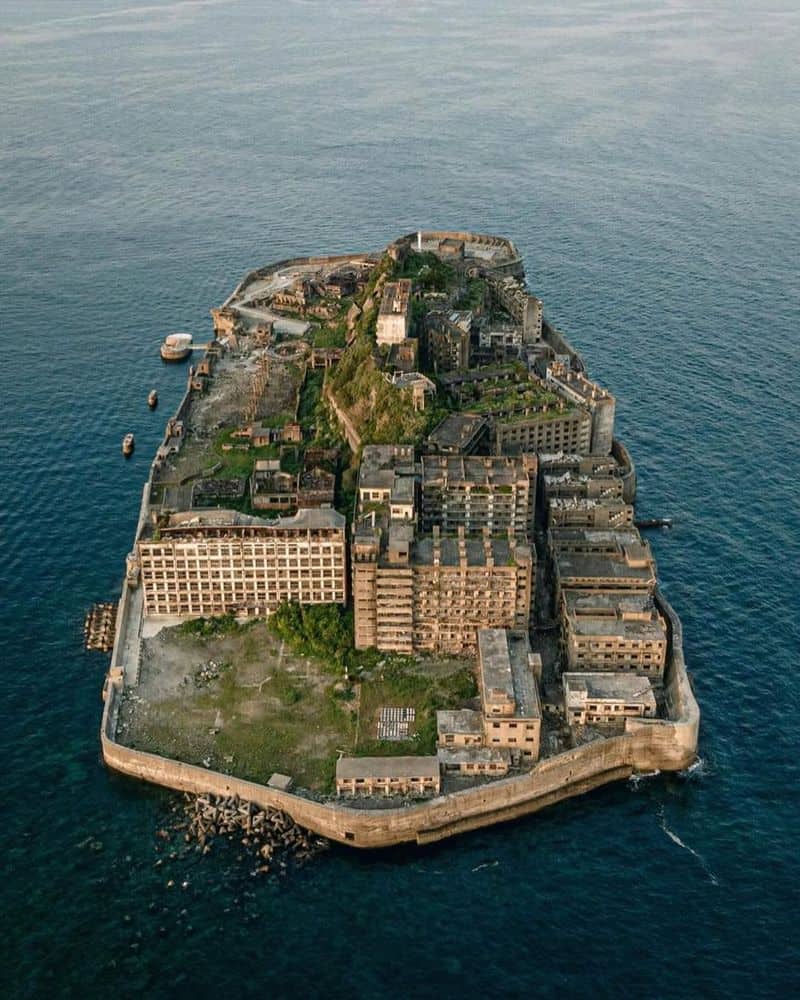
Hashima Island is a former undersea coal-mining facility off the coast of Nagasaki, operational from 1887 to 1974. The island earned the nickname Gunkanjima—battleship island—because its silhouette of high-rise concrete apartments resembled a military warship. It became one of the most densely populated places on Earth during its mining decades, then was abandoned when Mitsubishi closed the mine. Access is now limited to guided boat tours with landing permits issued by Nagasaki authorities.
The island's official name, Hashima, translates simply to "border island," but locals and tour operators worldwide know it as Gunkanjima. From 1916 onward, Mitsubishi constructed Japan's first large-scale reinforced concrete apartment buildings on the site to house miners and their families working the undersea Takashima coalfield. At peak density in 1959, the population reached 5,259 people on 16 acres—835 people per acre, nine times the population density of Tokyo at the time. What is Hashima Island today is a question answered by its physical remains. The concrete high-rises, now skeletal, still stand where miners once lived in 140-square-foot apartments. The island contained a school, hospital, shrine, cinema, and rooftop gardens. Seawalls encircle the perimeter because typhoons regularly battered the exposed rock. When the coal ran out in January 1974, Mitsubishi evacuated all residents within three months. The island sat closed to the public until 2009. Visitors now land on a 300-meter concrete pier and walk a designated path through the southern district under the supervision of licensed guides. Nagasaki Prefecture restricts access to protect both visitors and the deteriorating structures. Tours depart from Nagasaki Port on scheduled cruises, weather permitting. Rough seas or high winds cancel landings frequently, especially between November and March. The 650 JPY conservation fee per person applies on top of the cruise fare. Hashima appeared in the 2012 film Skyfall as the villain's lair, which increased international recognition, though the production used studio sets rather than filming on-site. The island's designation as part of the Sites of Japan's Meiji Industrial Revolution UNESCO World Heritage listing in 2015 acknowledges its role in coal extraction and rapid modernization. Controversy surrounds the site because of forced Korean and Chinese labor during World War II, a history addressed in interpretive signage and the on-island exhibition. The concrete shells remain a stark record of a community that thrived and vanished within a single century.
“At peak density in 1959, the population reached 5,259 people on 16 acres—835 people per acre, nine times the population density of Tokyo at the time.”
The Industrial Past: What Is Hashima Island?
Mitsubishi Corporation purchased Hashima in 1890 and transformed the uninhabited reef into Japan's most densely populated settlement. Engineers encased the island in concrete seawalls between 1897 and 1931, expanding the landmass from 0.063 to 0.065 square kilometers. The company sank the first undersea coal shaft in 1895, reaching seams 600 meters below the ocean floor. By 1916, Japan's first large-scale reinforced concrete apartment blocks rose on Hashima, a construction method later adopted across the nation's industrial cities. Production peaked in 1941 when miners extracted 410,000 tons of coal annually. During the Pacific War, the Japanese government forcibly relocated over 500 Korean laborers and 200 Chinese prisoners of war to Hashima's shafts. Conditions in the undersea mines were severe—temperatures exceeded 30 degrees Celsius, and flooding remained a constant threat. Post-war investigations documented fatalities among the conscripted workers, though exact numbers remain disputed in historical scholarship. The population reached 5,259 residents in 1959, achieving a density of 83,500 people per square kilometer within the residential zone. Japan's energy sector shifted to petroleum in the 1960s. Mitsubishi closed the mine on January 15, 1974. Within three months, every resident had evacuated. The company sealed the buildings and transferred ownership to Nagasaki City in 2002. UNESCO designated twenty-three Meiji-era industrial sites, including Hashima, as World Heritage in 2015. Visitors now walk a 220-meter pier route past apartment ruins, the former mining office, and collapsed infrastructure. Vegetation overtakes the concrete, and typhoon damage accelerates structural decay. What remains on site today offers physical evidence of Japan's coal-driven modernization and the human cost of rapid industrialization.
Mitsubishi Corporation acquires the uninhabited island and begins coal extraction operations.
Concrete seawalls expand the island's area to 0.065 square kilometers, protecting against typhoons and erosion.
Japan's first large-scale reinforced concrete apartments are constructed to house the growing mining workforce.
Coal production reaches its wartime peak of 410,000 tons; forced laborers from Korea and China arrive under conscription.
Population peaks at 5,259 residents, making Hashima one of the world's most densely populated places.
Mitsubishi closes the mine on January 15; complete evacuation follows within months.
UNESCO inscribes Hashima as part of the Sites of Japan's Meiji Industrial Revolution World Heritage designation.
Admission and Conservation Fees: What Is Hashima Island Costing?
Accessing Hashima Island requires two distinct payments: the cruise fare for transit and a mandatory conservation fee. The conservation fee is collected to support the maintenance of the island's historical structures.
A typical adult pays a 650 JPY conservation fee in addition to the cruise fare, which varies depending on the specific tour operator chosen.
Operating Schedule: What Is Hashima Island's Availability?
Hashima Island is accessible daily through organized tour operators. Visitors must adhere to strict departure schedules to access the site.
| Monday | 09:00–16:00 | |
|---|---|---|
| Tuesday | 09:00–16:00 | |
| Wednesday | 09:00–16:00 | |
| Thursday | 09:00–16:00 | |
| Friday | 09:00–16:00 | |
| Saturday | 09:00–16:00 | |
| Sunday | 09:00–16:00 |
Navigating the Journey: How To Get To What Is Hashima Island?
Hashima Island is located approximately 18 kilometers from the Nagasaki Port. The only way to access the island is by official boat tours departing from Nagasaki City.
Nagasaki Port to Hashima Island
JR Nagasaki Main Line to Nagasaki Station
Nagasaki Bus to Nagasaki Shinchi Terminal
Optimal Visitation Timing: When To See What Is Hashima Island?
The best arrival window for Hashima Island is 09:00–15:30, as tours adhere to strict daily schedules. Visiting during the spring or autumn months provides more stable weather conditions, which is critical for successful boat landings.
Weekday mornings
Lower visitor densityTemperatures 15–22°C; mild conditions
Morning departures offer the highest probability of successful island landings due to calmer sea states.
April and May
Moderate crowdsTemperatures 16–23°C; pleasant
Spring offers comfortable walking conditions and clearer visibility for viewing the structures.
October and November
Moderate crowdsTemperatures 17–24°C; dry
Autumn provides stable weather patterns with less risk of typhoon-related tour cancellations.
Summer months
Peak visitor numbersTemperatures 25–32°C; high humidity
High humidity and increased heat require preparation, though sea conditions are often calm.
Verdict: The optimal visitation period is weekday mornings during April or October to balance favorable weather with manageable crowd levels.
Visiting Protocols: Rules for What Is Hashima Island?
Hashima Island operates under strict safety protocols due to structural instability and heritage preservation requirements. All visitors must remain with their guide and follow designated pathways at all times.
Do
- Stay within marked viewing areas at all times
- Follow your guide's instructions without deviation
- Wear closed-toe shoes with good grip
- Carry water and sun protection
- Report any safety concerns to your guide immediately
Don't
- Enter restricted zones or approach crumbling structures
- Touch or remove any materials from the site
- Separate from your tour group for any reason
- Climb on ruins or lean against unstable walls
- Ignore weather-related cancellations or landing refusals
Check availability
Frequently asked questions about what is Hashima Island
Everything you need to know about what is hashima island